Software Development
 SkyTrace
Tech Stack
About Project
The Magic Pencil Never Runs Out
Ask any kindergarten teacher about the magic pencil, and watch their face light up.
It is one of those classroom traditions that has been around for generations. A teacher holds up an invisible pencil, waves it dramatically in the air, and suddenly every small hand in the room is gripping one too. They trace letters in the air, draw shapes across the sky above their desks, and giggle while doing it. The learning is real, but it feels like a trick.
The magic pencil works because it removes the pressure. No paper to tear. No crayon to break. No wrong marks to stare at. Just a hand moving through space, trying, correcting, trying again.
SkyTrace was built on that exact idea.

When the Page Runs Out
Anyone who has sat with a young child through a tracing workbook knows how this usually goes.
The child starts well. The first few pages are full of effort. But somewhere around page four, the enthusiasm drops. The lines get shakier. The child starts rushing. And then, one afternoon, they look up with genuine relief and announce that the book is finished.
For a child who finds tracing hard, a finished book is less a milestone and more a relief.
The problem with paper is that it runs out. And when it does, so does the practice. Children who need the most repetition to build confidence are the same ones most likely to celebrate when the pages are gone.
SkyTrace solves this quietly. Every practice session starts fresh, and there is always room for one more try. A child can trace the letter A one time or fifty times, and the experience is exactly the same each time: patient, clear, and ready to go again the moment the child is.
A Teacher Who Never Gets Tired
The other challenge with tracing is that it works best with someone watching.
A good teacher does not just hand a child a dotted letter and walk away. They sit alongside, watch the hand move, and gently correct before a bad habit forms. They show which stroke comes first, where the line curves, when to lift and when to continue.
Most parents do not have time to do this for every letter, every number, every shape. And once a child is practising at home, they are usually on their own.
SkyTrace steps into that gap.
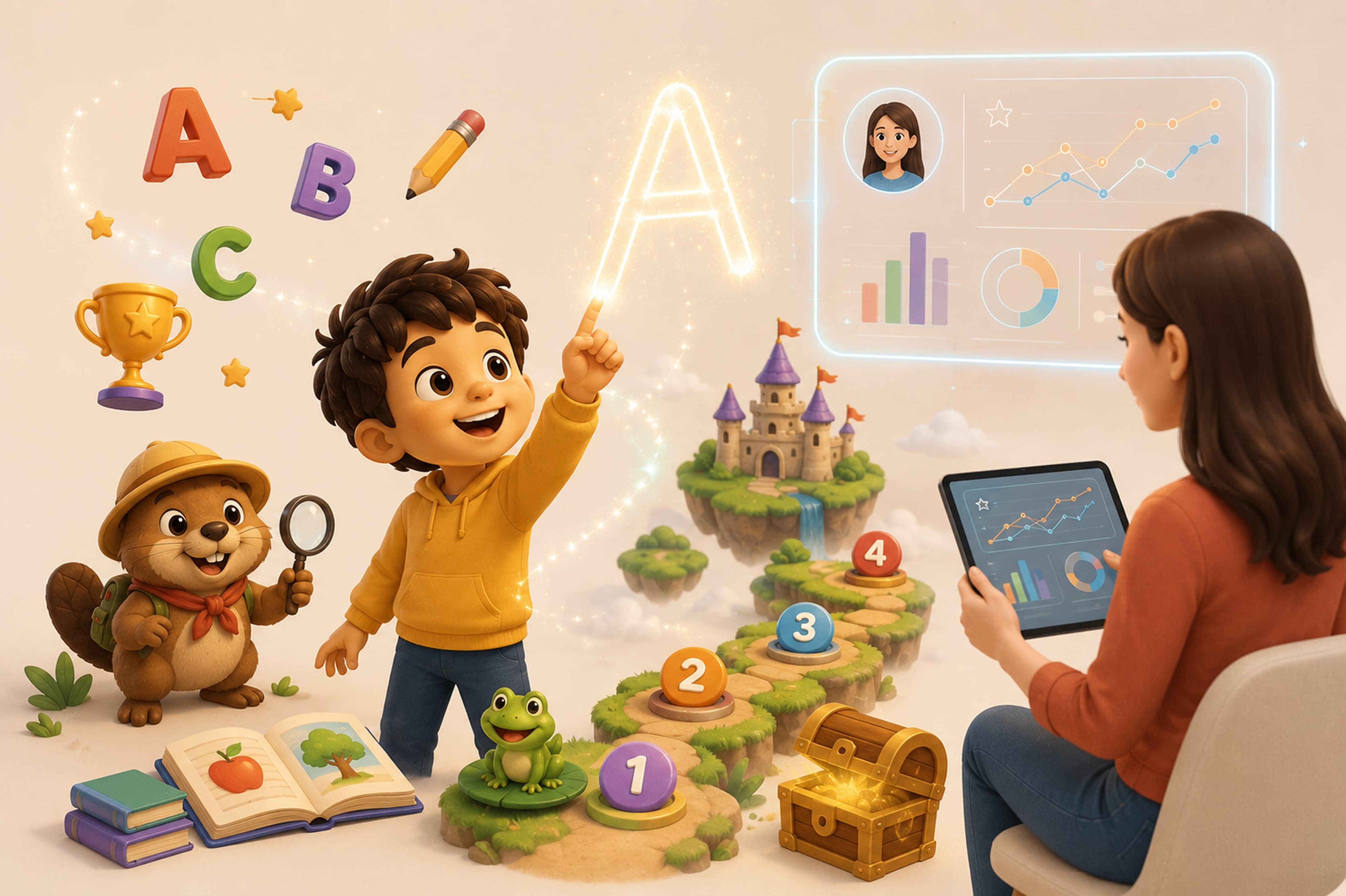
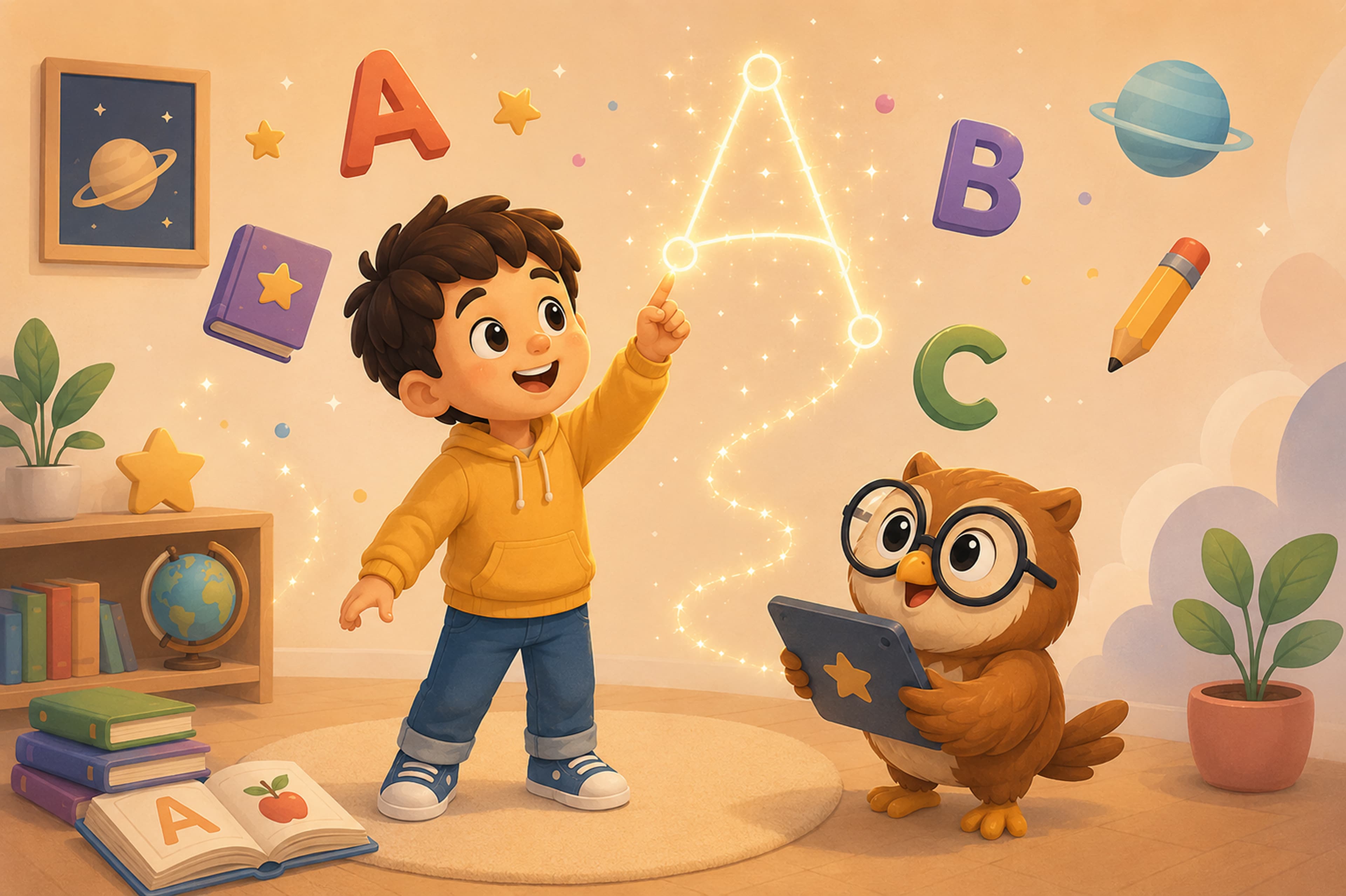
Open the app, and a virtual teacher appears on screen. It shows exactly where each stroke should go, numbered in order, guiding the hand from the very first movement to the last. If the child drifts, the app notices. It does not react with impatience. It simply shows the way back, as many times as needed, for as long as it takes.
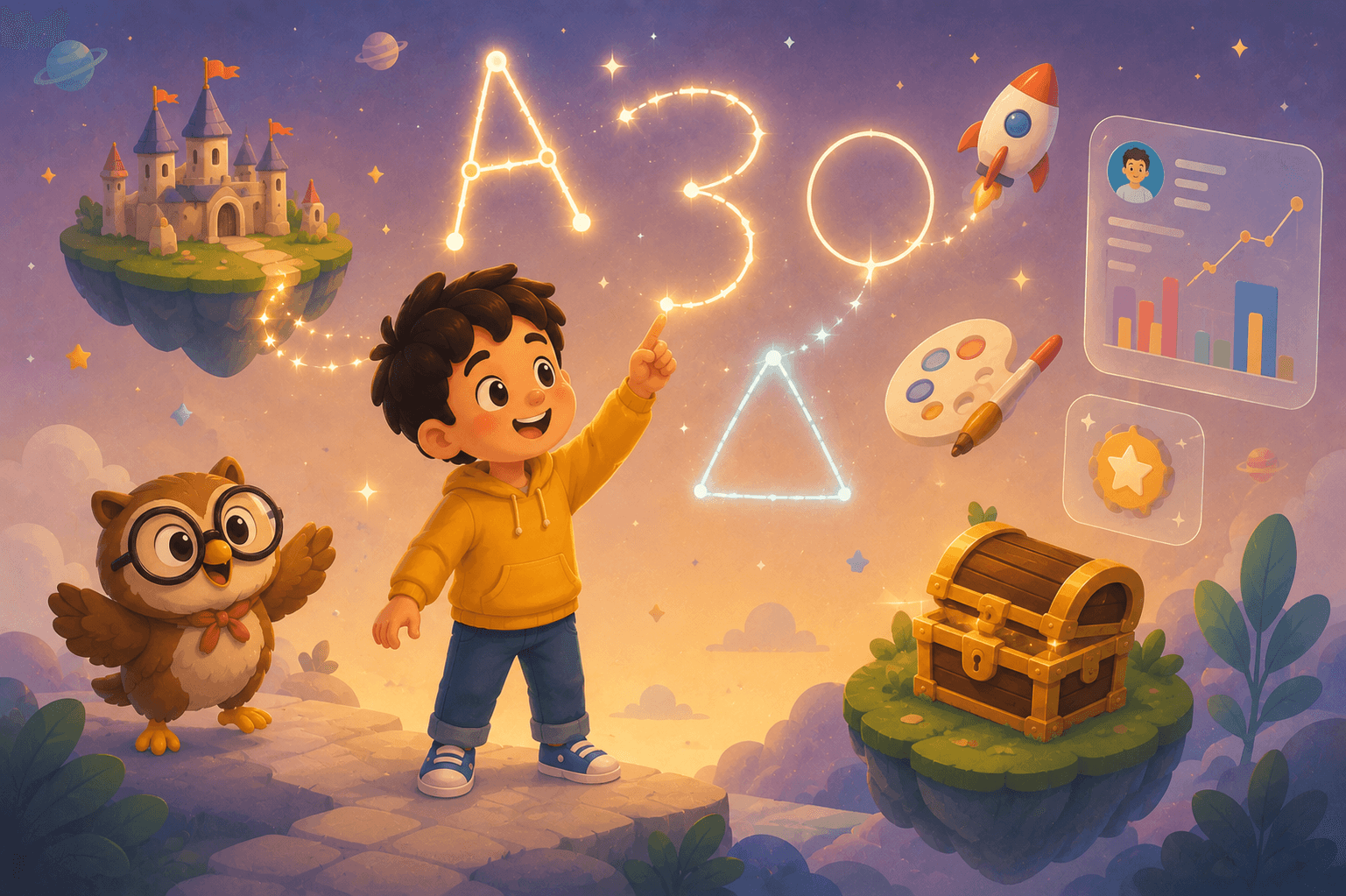
The A for Apple screen, with its numbered dotted path and the cheerful owl watching from the corner, is designed to feel like sitting next to a teacher. The warmth is intentional. The patience is built in.

The Hand Learns by Doing
There is a reason early childhood educators have always prioritised tracing before writing.
Every letter and number a child will ever write is made up of a small set of building blocks: a straight line going down, a slanting line going across, a gentle curve turning left, a sharp angle changing direction. These are not complicated movements, but they are precise ones. And the only way a young wrist learns them is by doing them, over and over, until the motion becomes natural.
This is harder than it sounds. A straight line requires the wrist to move steadily without drifting. A slanting line asks it to hold a diagonal that feels unnatural at first. A curve means controlling the speed of the movement as the direction slowly changes. Each of these takes practice that no single workbook session can fully cover.
SkyTrace builds these sessions in, one stroke at a time. As a child traces through the dotted path on screen, their wrist is doing the real work: learning to pull a straight line, hold a slant, and follow a curve without breaking it. The camera watches each movement closely and guides the hand back if it wanders, so the wrist is always practising the right motion, not reinforcing a wrong one.
Over time, those movements stop being something a child has to think about. They become something the hand simply knows.
Try Again, and Again, and Again
The most important thing a young learner can hear is that trying again is not failure. It is the whole point.
SkyTrace never signals frustration. It never marks something wrong and moves on. Every attempt is treated as part of the process, and every retry is welcomed exactly the same way as the first try. A child who traces the letter B three times correctly will feel the same quiet reward as a child who traces it seventeen times before getting it right.
And because SkyTrace lives on a phone, this can happen anywhere. At the kitchen table before school. On a quiet afternoon at home. There are no workbooks to carry, no teachers to schedule, no special setup required. Whenever a child is ready, the practice is ready too.
That is the spirit of the magic pencil brought into a phone. The invisible line in the air, the hand that keeps trying, the teacher who never runs out of patience.
SkyTrace just made it possible to take that experience home.